Halim is picky about most things. He'll refuse kibble he ate yesterday. He'll walk away from a bully stick if it looks at him wrong. But there is one food he has never, not once, questioned: dehydrated beef liver.
One afternoon Irina swapped his regular turkey for a few cubes of raw liver, then dried some in the oven the next day as a treat. He ate it like it was the only thing standing between him and the end of the world. That reaction stuck with me.
And I thought: if Halim, of all dogs, loves this — other picky dogs will too. There's a business here.
Three months in a kitchen oven
I went all in. Not as a hobby — as a product.
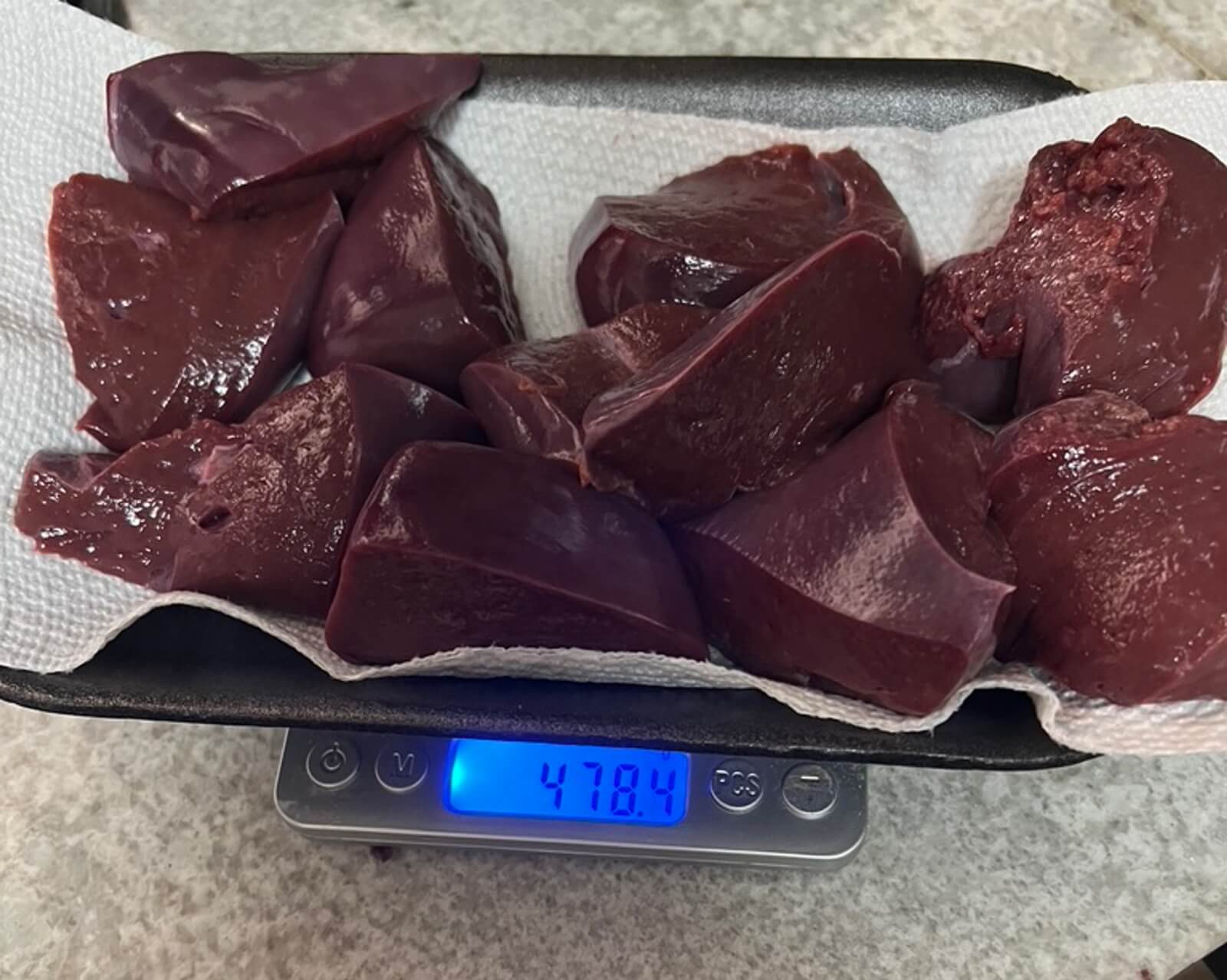
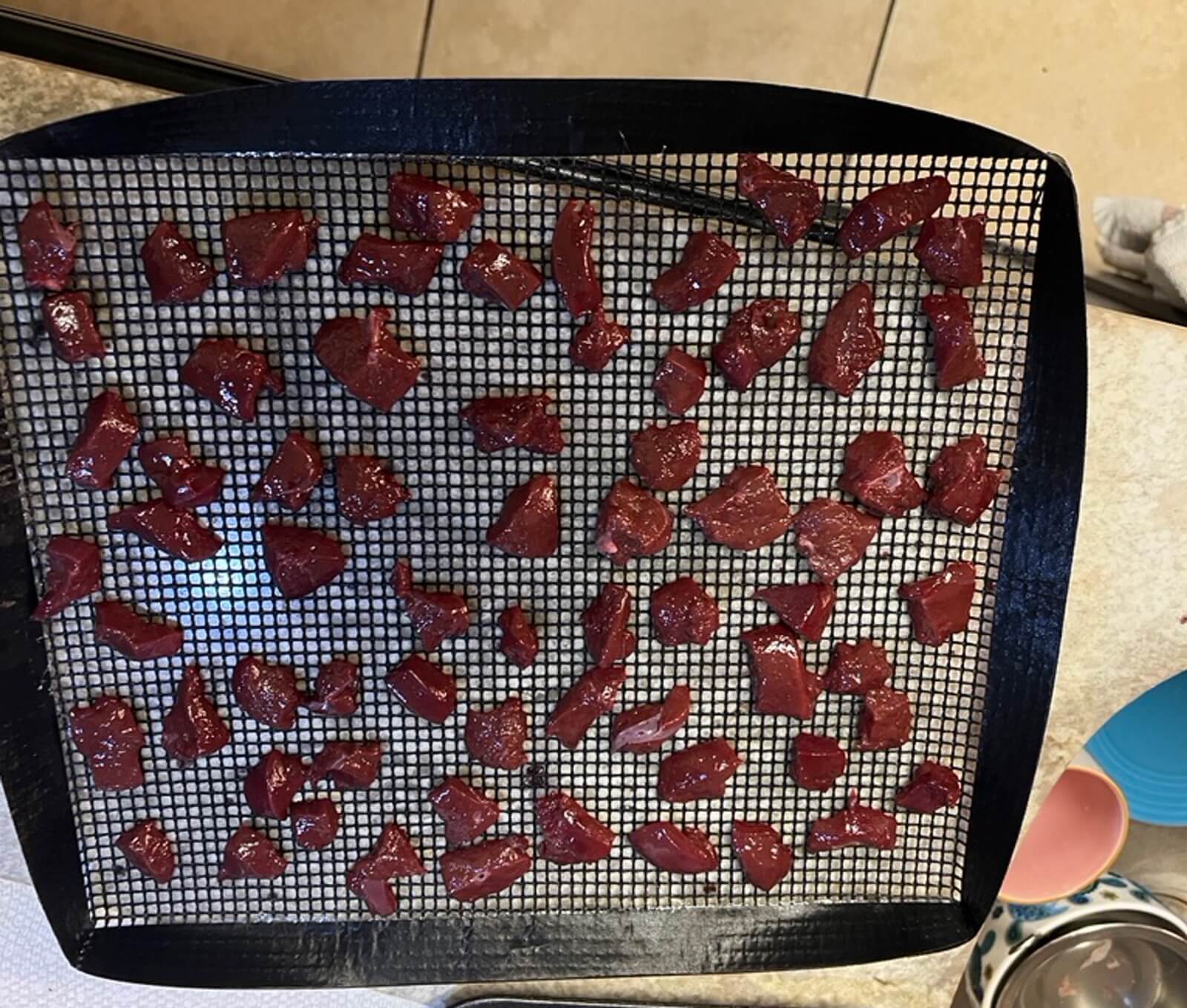
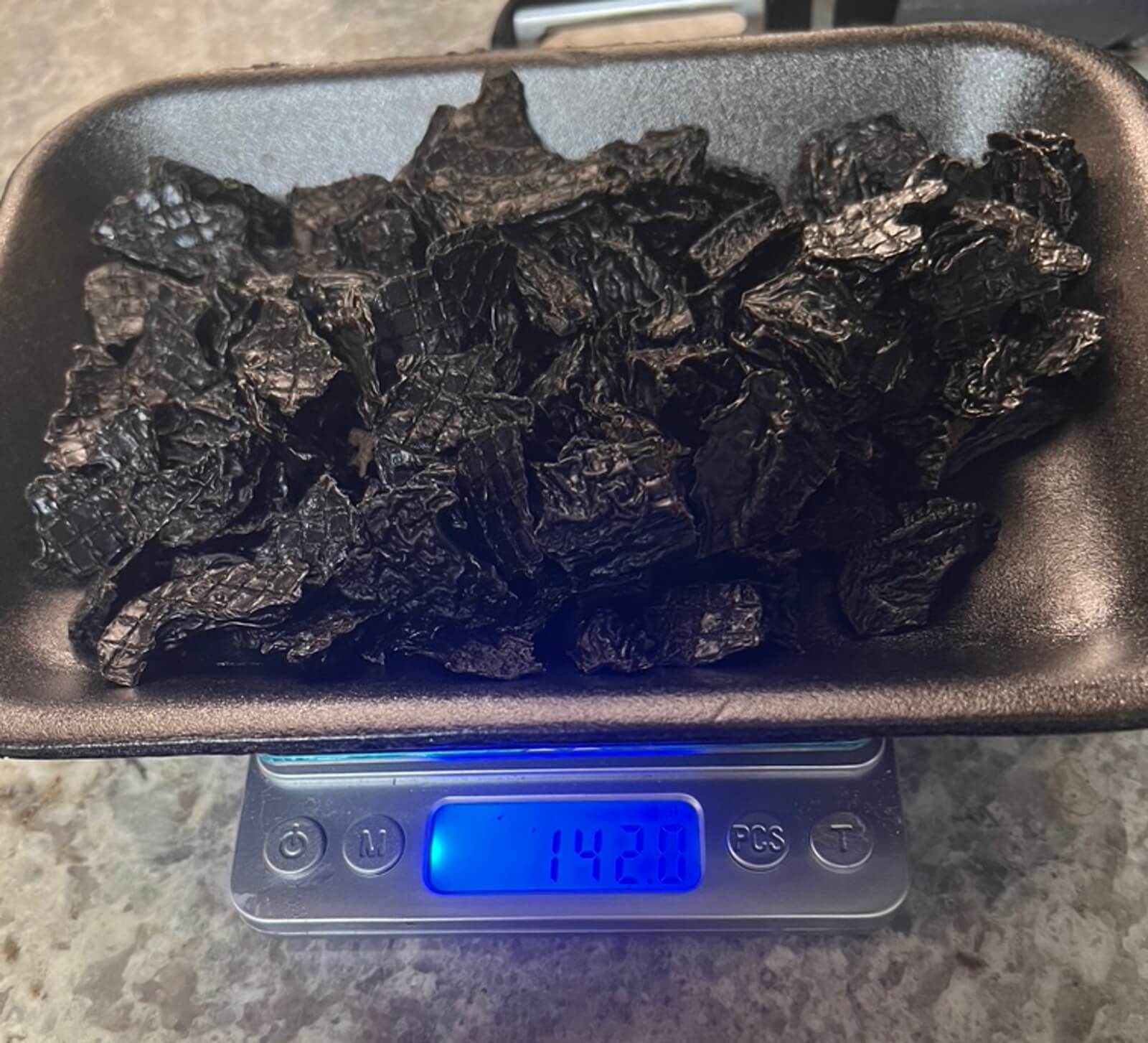
I bought Skylark calf liver from a supplier I trusted. Cut it into fifteen-to-twenty millimetre cubes while it was still raw. I weighed every batch on a digital scale before it went anywhere near the oven, because I wanted to know exactly how much moisture was coming out of it. A finished batch should weigh roughly a third of the raw weight — moisture content under ten percent. A piece should snap cleanly, not bend.
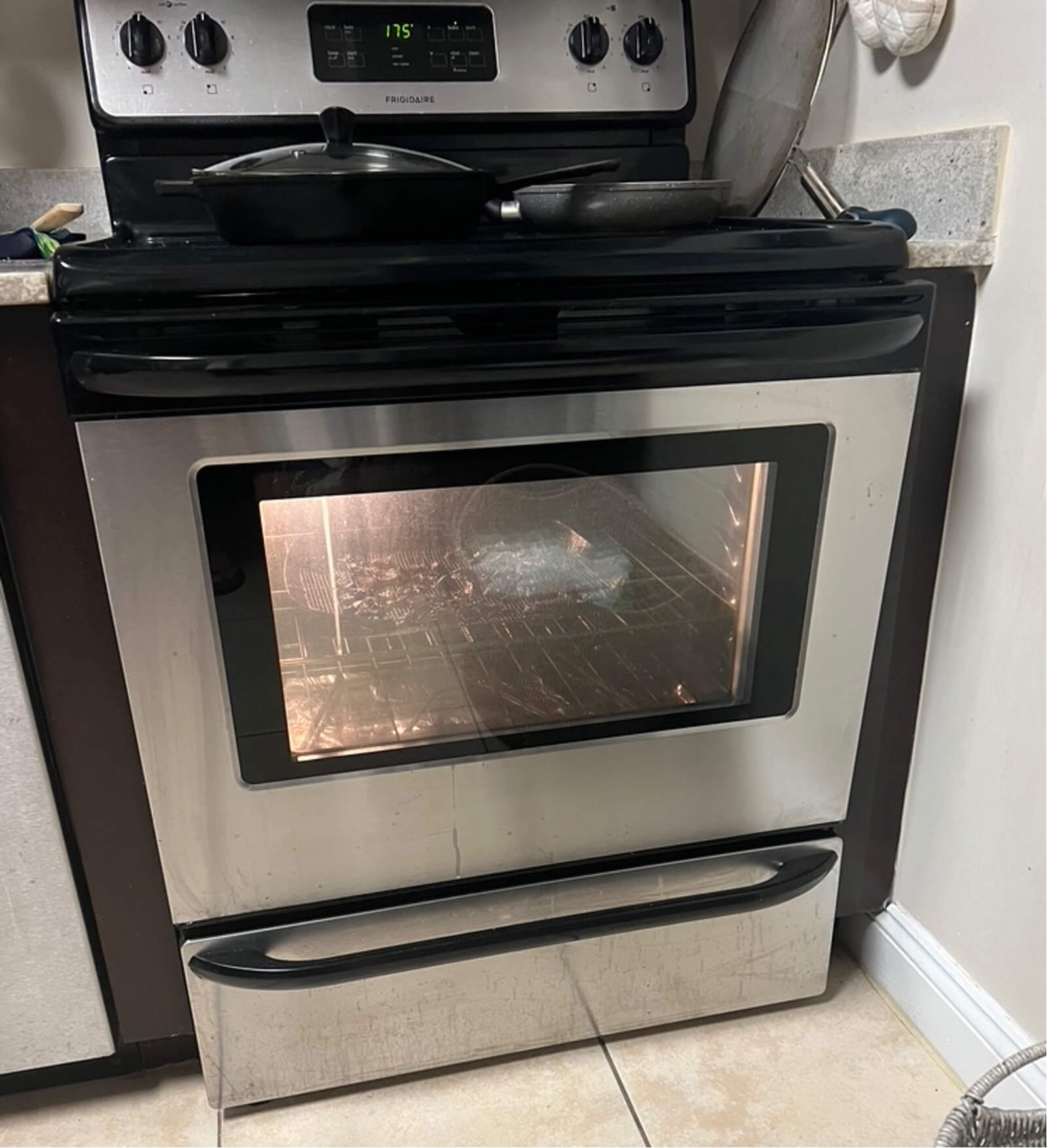
Then I loaded a wire rack, set the oven to 170°F, wedged the door open about a centimetre with a wooden spoon for airflow, and let it go for six to eight hours. Flipped every ninety minutes. The airflow mattered more than the temperature — dehydration isn't cooking, it's patience.
I weighed everything. I logged every batch. I adjusted cube sizes, oven positions, flip timing. I was dehydrating the way other people make sourdough — obsessively, with a notebook.
Halim was, unsurprisingly, delighted by all of this. He would sit in the kitchen doorway for the entire six hours and pretend to be starving.
I had a whole brand ready
At some point the experiments stopped being experiments. I had a name — Treats from Halim. I had a logo designed, a round black-and-gold one with Halim mid-stride. I had zip-lock mylar foil pouches ordered, three-by-four inches, printed labels, a batch-coding system. A sample-giveaway plan. Not for sale — sample only. Made in Miami, FL. 100% beef liver, single ingredient.
Irina, by the way, knows every dog in our part of Miami. Not an exaggeration. She knows their names, their owners, their medical histories. The plan was to start by handing free samples to people she already knew — real picky dogs, real feedback, real reviews. Proof that the product worked before charging anyone money for it.
I was maybe two weeks away from the first sample drop.
A neighbour's Yorkie changed everything
Before we distributed anything, a neighbour came over with her Yorkie. Small dog, friendly, the kind that sniffs everything. While we were talking, Halim was eating a few pieces of dehydrated liver — my liver, from my kitchen, same recipe.
A piece fell. Or maybe he dropped it. Dogs are fast. The Yorkie got to it before any of us noticed, ate it, and went on with her evening. Nobody thought anything of it. She seemed fine when she left.
The next day, her owner messaged us. The Yorkie had been sick through most of the night. Vomiting. Specifically, vomiting up beef liver.
She recovered fine. It wasn't a disaster. But it was the exact scenario I had been telling myself couldn't happen.
A product that works for one dog is not a product.
Here is the thing I had not fully internalised until that moment. Halim is one Chinese Crested with one digestive system and one set of preferences. Liver is rich. Different breeds, different sizes, different sensitivities, different reactions. What feels like a gift to Halim is an all-night cleanup for a Yorkie.
I had been close to handing sample bags to people who trust my wife. If one of those dogs had reacted like the Yorkie did — worse, if one reacted badly in a way that wasn't temporary — Irina's reputation in the community, a reputation she has built over years, would have been the collateral damage. Not just the business. Her.
I stopped that week.
The regulatory math didn't work either
Once I stepped back, I started reading about what producing pet treats commercially actually requires in Florida. FDACS registration. FDA food facility registration. Commercial kitchen. Inspections. Labelling standards. Liability. It's not hostile, it's reasonable — pet food is food, and there are rules for the same reasons there are rules for human food.
But here is what broke the business model on paper: the drying process I had developed — low temperature, oven door cracked open for airflow, six to eight hours per batch — is a home-kitchen technique. You cannot replicate it properly in an industrial convection oven designed for cooking, not dehydrating. Proper commercial dehydration needs proper commercial dehydrators, which most rental commercial kitchens don't have. And renting a commercial kitchen for twelve hours just to dry meat, at $850 to $1,800 a month, doesn't pencil out against the margin on a fifteen-gram sample bag.
I'd have to redesign the entire process from scratch. New equipment. New recipes. New price points. For a market that wasn't proven yet. During a research phase that might take another year.
That wasn't a pivot. That was a whole second business.
What I kept
I still make liver for Halim. Smaller batches, not for anyone else's dog, not labelled, not branded. He still sits in the kitchen doorway pretending to starve while it dries. The logo files are in a folder. The mylar pouches are in a drawer. Maybe one day — with proper equipment, a proper process, and a clearer regulatory path — I'll come back to it.
For now, the product is off the table. But the question that started all of this is still a good question:
How do you find treats that picky dogs will actually eat, without getting buried in marketing noise and bought reviews?
So I started writing instead
Halim still tests things. He just tests things other people already make — treats, chews, toys, anything we bring home for him and anything Irina's network recommends for their dogs.
I write down what happens. What he eats, what he refuses, what seems to agree with him, what doesn't. Irina adds her perspective from grooming and feeding dozens of other dogs. And when something is genuinely good, we link to where you can buy it. When something isn't, we say that too.
That's this website.
It isn't the business I thought I was building three months ago. It's a better version of the same impulse: help picky-dog owners find things that work. Just without the liability of a toaster oven in a Miami condo trying to be a factory.
The Yorkie is fine, by the way. We still see her on walks.